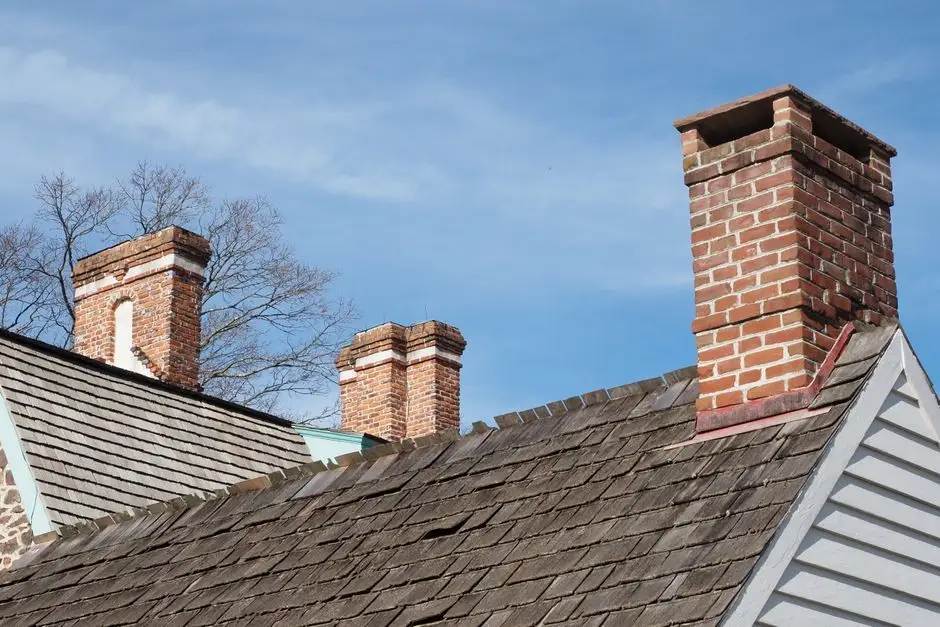
Your chimney needs tuckpointing when the mortar joints between the bricks start to crumble, recede, or show visible gaps - usually within 20 to 30 years on an original chimney, sooner if water has been getting in. Those failing joints are the first structural warning a masonry chimney gives you, and they almost always show up before the bricks themselves crack. In Braintree Town, Massachusetts, where freeze-thaw cycles run hard from November through March, that window is often shorter.
Below we walk through the seven signs we look for on every roof, why this region chews through mortar faster than most, what tuckpointing costs in 2026, and when a repair turns into a rebuild.
What Chimney Tuckpointing Actually Does
Chimney tuckpointing is a masonry repair that grinds out the failed mortar between bricks and packs new mortar into those joints to restore the chimney's structural bond and keep water out. It is not a cosmetic skim. Done right, we cut the old mortar back to a depth of roughly 3/4 inch - about twice the width of the joint - so the new mortar actually locks into the brick instead of sitting on the surface like caulk.
The mortar is the sacrificial part of a chimney. It is softer than the brick on purpose, so it absorbs movement and weather and fails first. When it goes, the bricks start rubbing against each other, the crown cracks, and water finds its way down into the flue. That is the point where a $1,200 tuckpointing job becomes a $9,000 rebuild.
If you are not sure whether you are looking at tuckpointing, repointing, or something else, they are the same job under different names. Homeowners search for Chimney tuckpointing in Braintree Town, Massachusetts and masons call it repointing - either way, it means new mortar in old joints.
The 7 Signs Your Chimney Needs Tuckpointing in Braintree Town, Massachusetts
The signs your chimney needs tuckpointing in Braintree Town, Massachusetts, are almost always visible from the ground with binoculars or from a second-floor window. You do not need to climb anything to spot most of them.
1. Crumbling or receding mortar joints
Run your eye up the chimney and look at the horizontal lines between bricks. Healthy mortar is flush with the brick face. Failing mortar is recessed, sandy, or missing in chunks. If you can push a screwdriver tip into a joint more than a quarter inch, that joint is done.
2. White chalky staining (efflorescence)
That white, powdery residue on the brick is efflorescence - mineral salts pushed to the surface by water moving through the masonry. It is not mold and it is not harmless. Efflorescence means water is entering the chimney somewhere and evaporating out through the brick, and the mortar is usually the entry point.
3. Visible gaps or voids between bricks
Once mortar erodes past about half an inch, you will see actual shadow lines between bricks. At that stage the chimney is no longer a single structural unit - it is a stack of loose bricks held together by gravity and a flue liner.
4. Brick spalling and flaking
When mortar fails, water sits in the joints and freezes. That freeze expands and pops the face off the brick - what masons call spalling. If you find brick flakes on your roof or in the gutter, tuckpointing is already overdue.
5. Cracks in the crown or a leaning chimney
A cracked crown lets water pour straight into the top of the masonry. A chimney that visibly leans - even a couple of degrees - usually means the mortar on one side has failed completely. Both are urgent.
6. Interior water stains or a damp fireplace
If you see brown or gray staining on the ceiling near the chimney, or the firebox feels damp in spring, water is getting through the masonry. That is a tuckpointing problem more often than a flashing problem.
7. Mortar dust in the firebox or on the roof
Fine sand-colored grit collecting at the base of the chimney or inside the firebox is mortar breaking down and falling. It is one of the last signs before real damage sets in.
If you spot two or more of these, get eyes on the chimney. Our team handles Chimney masonry repair in Braintree Town, Massachusetts and can tell you in one visit whether you are looking at tuckpointing or something bigger.
Why Braintree Town Chimneys Deteriorate Faster Than You'd Think
Braintree Town chimneys deteriorate faster than the national average because of how many freeze-thaw cycles this part of Norfolk County gets each winter. We swing above and below 32°F dozens of times between November and March. Every one of those swings pulls water into the mortar and then expands it.
The housing stock matters too. A large share of homes in South Braintree and the neighborhoods around Quincy Avenue and Washington Street were built between 1900 and 1950, with soft lime-based mortar that was never designed to last a century. That mortar is now 75 to 125 years old. It has done its job. It is tired.
Coastal weather does not help. Braintree Town sits close enough to the water that wind-driven rain hits the northeast face of most chimneys hard, and that is almost always the side that fails first. If your chimney faces the weather, expect to tuckpoint 5 to 10 years sooner than a sheltered one.
For homeowners who want eyes on the whole system before winter, our Chimney inspection service in Braintree Town, Massachusetts includes a mortar-joint assessment from the roof and a flue check from the firebox.
How Often Does a Chimney Need Repointing in Braintree Town MA?
A chimney in Braintree Town MA needs repointing roughly every 20 to 30 years, and then every 15 to 20 years after that. The first tuckpointing on an original 1920s chimney is usually the big one - that is when the original lime mortar gives out across the whole stack.
After that first repoint, the clock resets. A properly done tuckpointing job with a modern Type N or Type O mortar holds 15 to 25 years in this climate. Type N is the standard for above-roof chimneys here because it is softer than the brick and handles freeze-thaw well. Type S is too hard for most older brick and will spall the faces off within a decade.
Two things shorten that timeline:
- No waterproofing. Bare brick absorbs water like a sponge. A breathable water repellent applied after tuckpointing adds 5 to 8 years to the mortar's life.
- A bad crown or cap. If water is pouring in from the top, the new mortar will fail from the inside out.
We tell customers to plan on a tuckpointing every 20 years and a full inspection every 12 months. That is the rhythm that keeps a masonry chimney standing for a century.
What Chimney Tuckpointing Costs in Braintree Town
Chimney tuckpointing cost in Braintree Town runs $850 to $2,400 for a typical single-flue residential chimney in 2026, with most jobs landing between $1,100 and $1,600. That covers grinding out the failed joints, repacking them with new mortar, and matching the color to the existing brick.
What moves the number:
- Height and access. A chimney over 25 feet needs more staging and more time. Add $200 to $500.
- Square footage of mortar. A wide 6-foot chimney has roughly double the joint length of a 3-foot one.
- Condition of the brick. If 10% or more of the bricks are spalled, we replace them during the same visit - $15 to $40 per brick installed.
- Related repairs. A new crown, cap, or flashing repair done at the same time saves the second trip.
If the chimney is leaning or the mortar is gone past the point of repacking, you are looking at a rebuild rather than tuckpointing. That starts around $6,000 and climbs from there. Catching the problem at the mortar stage is what keeps you out of that bracket.
We quote the job in one visit and hold the number. No surprise add-ons after the scaffolding goes up.
Common Mistakes We See Homeowners Make
The most expensive mistake we see is a homeowner smearing caulk or hydraulic cement over failing joints to stop a leak. It traps water inside the masonry and accelerates the damage underneath. We have pulled that patch off chimneys where the brick behind it had turned to powder.
Other mistakes worth avoiding:
- Using the wrong mortar. Portland-heavy Type S mortar on soft 1920s brick is a guaranteed spalling problem within 10 years. The mortar must be softer than the brick.
- Tuckpointing only the visible side. If the northeast face is crumbling, the other three are not far behind. Half a job means a second visit in three years.
- Skipping waterproofing. It is $200 to $400 on top of tuckpointing and it is the single best thing you can do to make the repair last.
- Ignoring the crown. A cracked crown pours water into the top of the chimney. Tuckpointing under a bad crown is money down the drain.
- Hiring the cheapest bid. A $400 tuckpointing quote usually means surface smearing, not real joint work. It fails in two winters.
If you want the job done once, our Professional Chimney repair in Braintree Town, Massachusetts crew grinds every joint to depth, matches the mortar, and waterproofs the finished stack before we leave the roof.
When to Call a Professional
Call a professional the moment you see mortar falling out of the joints, brick flakes on the roof, or water stains on the ceiling near the chimney. Those are not maintenance items - they are active damage.
We handle tuckpointing on everything from a small single-flue chimney in a Braintree Town cape to a 30-foot stack on a triple-decker. Our techs work from the roof with proper staging, grind every joint to the right depth, and match the mortar to your existing brick so the repair disappears. If the chimney needs more than tuckpointing - a crown, a cap, or a liner - we tell you on the same visit and quote it in one number.
If you would rather not wait for the next freeze to find out, book a Chimney repair near me in Braintree Town, Massachusetts visit and we will tell you exactly what the chimney needs.
Frequently Asked Questions
How much does chimney tuckpointing cost in Braintree Town Massachusetts?
Most tuckpointing jobs in Braintree Town run $850 to $2,400 in 2026, with a typical single-flue chimney landing around $1,100 to $1,600. Height, chimney width, and how many bricks need replacing are the main variables. Waterproofing adds $200 to $400.
What are the signs your chimney needs tuckpointing in Braintree Town?
The clearest signs are crumbling or receding mortar joints, white efflorescence staining, visible gaps between bricks, brick spalling, and mortar dust collecting on the roof or in the firebox. Two or more of those together mean it is time for a professional look.
How often does a chimney need repointing in Braintree Town MA?
Plan on every 20 to 30 years for the first repoint on an original chimney, then every 15 to 20 years after that. Braintree Town's freeze-thaw cycles and older lime mortar push many chimneys toward the shorter end of that range.
How long does chimney tuckpointing last in Braintree Town?
A properly done tuckpointing job with Type N mortar lasts 15 to 25 years in this climate. Add a breathable water repellent after the mortar cures and you can stretch that to the high end of the range. A bad crown or missing cap will cut it short.
Can I tuckpoint my own chimney?
You can, but the two things that matter most - grinding joints to the correct depth and matching mortar strength to the brick - are where most DIY jobs fail. On a chimney over 10 feet, the roof access alone makes it a job for a pro.
Get Help With Chimney Repair in Braintree Town
If your mortar is crumbling, your brick is spalling, or you just want a straight answer about whether your chimney needs tuckpointing this fall, call MendexoLift. We serve Braintree Town and the surrounding Norfolk County area with same-week scheduling and upfront pricing.
Call (844) 803-2151 and we will get eyes on your chimney before the first hard freeze.